
Online Vet Visit Options: Costs, Prescriptions & Fit
Advertiser disclosure: Paw Parent HQ may earn a commission when you sign up for a service or buy through links on this site. It never costs you extra, and it never changes our verdicts — we recommend what we'd use for our own pets, and we never take money from breeders or puppy sellers.
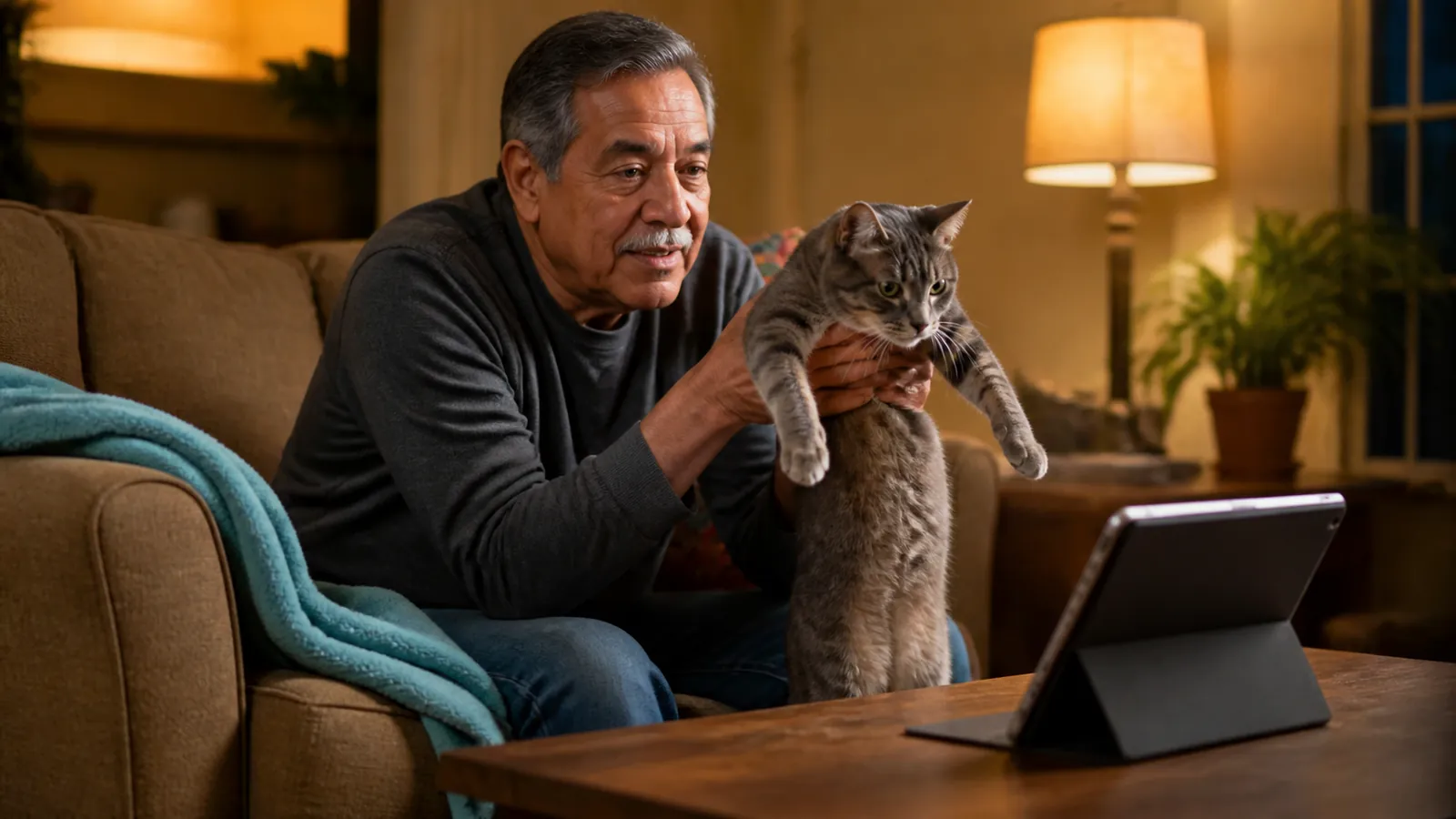
Can an online vet visit help your pet, and is it legitimate?
Yes — an online vet visit can be a legitimate and genuinely useful part of a dog's or cat's care. But the words "online vet" on a homepage do not tell you the three things that decide whether it will help you tonight.
The first is who you actually reach. Some services connect you to a licensed veterinarian. Others connect you to a veterinary technician — a credentialed professional who can give general guidance but who, as these services state plainly, does not diagnose or prescribe. The second is where your pet is physically located at the time of the visit — not your billing address. Veterinary practice is regulated state by state, so a service that operates in seven states cannot help a pet sitting in the other forty-three. The third is whether your concern can be assessed without hands-on examination. A veterinarian can look, listen to your history, and build an action plan remotely. A veterinarian cannot palpate an abdomen, run bloodwork, take an X-ray, or treat shock through a screen.
None of that is decided by which brand you pick. It is decided by the level of care you need. So choose the service type first and the provider second.
The verdict, in one line: an online vet visit is worth buying when the professional is appropriately licensed, your pet is physically in an eligible state, and the concern is suitable for remote assessment. It is not a substitute for a physical exam, diagnostic testing, procedures, or emergency treatment, and no service can promise you a prescription.
If this may be an emergency, stop shopping and get hands-on help.
Go to a veterinary clinic or emergency hospital now — do not book a video appointment — if you see any of these in a dog or a cat. The ASPCA's emergency care guidance lists these among the signs that emergency care is needed; ASPCA presents the list in a dog context, and the signs below apply to cats as well (checked August 7, 2026):
- Pale gums
- Rapid breathing
- A weak or racing pulse
- A body temperature that has clearly changed
- Difficulty standing, or apparent paralysis
- Loss of consciousness
- Seizures
- Excessive bleeding
If your pet may have eaten a medication, plant, food, or household product, contact your veterinarian or an animal poison-control service straight away, even if your pet seems fine. The ASPCA Animal Poison Control Center answers at (888) 426-4435, 24 hours a day, 365 days a year, and states that a consultation fee may apply without publishing the amount on that page; AAHA reported the ASPCA fee as $95 in September 2025. The Pet Poison Helpline is a second 24-hour option at (855) 764-7661, and publishes a fee of $89 per incident that includes follow-up consultations (all checked August 7, 2026).
If your pet is in Georgia, call your own veterinarian or an emergency clinic first. Both national hotlines' direct access to Georgia pet owners has been unsettled since a 2025 change to Georgia's veterinary telehealth law, and the sources still disagree — see what happened in Georgia below. Your veterinarian can reach poison control on your pet's behalf either way.
You will only recognize pale gums or rapid breathing in your own animal if you have looked once when it was well. Take thirty seconds while things are calm to watch your pet breathe at rest, and to lift a lip and see what its normal gum color is.
Lower your threshold for some animals. Anything new, and anything getting worse, warrants same-day contact with a veterinary clinic when the patient is a very young puppy or kitten, a senior, a pregnant animal, or one already being treated for something. For these, the question is not which service to book — it is how soon a clinic can see them.
Three more signs are species-specific, and they are the ones most often taken to a video appointment first.
In a cat: straining in the litter box and producing little or no urine. The AVMA describes this as more often a sign of a blocked urethra than of constipation, most common in male cats one to ten years old, and states that urethral obstruction is an emergency requiring immediate veterinary care — untreated, it can be fatal in less than 24 to 48 hours (checked August 7, 2026). A cat that is trying to urinate and cannot needs a clinic tonight, not an appointment slot tomorrow.
Also in a cat: breathing with an open mouth, or any visible effort to breathe. Cats are nose breathers. The Cornell Feline Health Center describes cats in respiratory distress as breathing noticeably fast, panting noisily with an open mouth, and lowering the head and extending the body forward — and notes they may look as though they are gagging and about to vomit, which is exactly how an owner can mistake a feline breathing emergency for the canine sign below. Cornell's guidance is blunt: any cat with breathing difficulty is at high risk of dying if it is not treated promptly, and if there is any question about whether an animal is breathing comfortably it needs a veterinarian right away rather than anything attempted at home (checked August 7, 2026).
In a dog: trying to vomit and bringing nothing up. The Merck Veterinary Manual lists nonproductive retching, heavy drooling, restlessness, and a swelling or enlarged abdomen among the signs of gastric dilation and volvulus in dogs, which can progress to shock (checked August 7, 2026). This one is a drive-to-the-clinic sign, not a call-first sign.
Do not wait for a video appointment slot, and do not use a comparison page to decide what counts as an emergency. When in doubt, call a clinic.
Start here
- Start with a free chat with a licensed veterinary professional if you mostly need general guidance for a dog or cat and you already know the situation is not urgent — free chat services state plainly that they do not diagnose or prescribe.
- Book a video appointment with a licensed veterinarian — $49.99 to $102 per visit among the services on this page, on the dates shown in the tables below — if you want an assessment, a possible prescription, or a written record. Check first that your pet will be in a state the service covers — the state-by-state table below has every state and the District of Columbia.
- Choose an annual membership instead of a single appointment — the two annual plans here with a published price are $120 and $132 — only if you expect repeat questions, have several pets, or want ongoing follow-up — and only after you have read what the annual charge actually includes.
- Buy nothing yet, and call your own veterinary clinic first, if your pet already has a diagnosed condition, takes ongoing medication, or if your clinic offers its own telemedicine — an established relationship with the practice that holds your pet's records is usually worth more than a new account somewhere else.
- If any sign in the block above is present, none of these options apply. Go in person, now.
On this page
- Can an online vet visit help your pet, and is it legitimate?
- Which level of online care do you actually need?
- Which online vet services did we compare, and what do they cost?
- Which online vet services can help a pet in your state?
- Which service fits your situation?
- What can an online vet do, and what still needs an in-person visit?
- What will you actually be charged, and what can you cancel?
- If cost is the reason you are looking at an online visit
- How do you prepare for an online vet visit and hand off to your clinic?
- What should you check before trusting a service with your pet's care?
- How to choose an online vet service without guessing
- Common questions about online vet visits
Which level of online care do you actually need?
Before you compare prices, write down four things. We call them the Four-Field Screen, because they are the fields that disqualify most of the options for most readers, and they take a minute.
- Where is your pet physically located right now — the state, not your billing address.
- Species and age — a nine-week-old kitten and a ten-year-old dog are different conversations.
- What you actually need — general guidance, a veterinarian's assessment, or a possible prescription.
- One-time or recurring — a single question, or a household that will have questions every month.
Then compare only the services that match all four. The four rows below are the care levels those answers point to. We call this the Care-Level Ladder, and the rest of this page is organized around it.
| Care level | Who you reach | Use it when | Not enough when | Species notes |
|---|---|---|---|---|
| Free chat | A licensed veterinary technician or veterinarian, identified as such | You want general guidance, help understanding a care plan, or a sense of whether to book something | You need a diagnosis, a prescription, or a documented clinical opinion — these services state plainly that they do not provide them | Scope is the same for dogs and cats; a cat straining in the litter box is never a free-chat question |
| Advice or triage membership | Veterinary staff on an ongoing, usually 24/7 basis | You have recurring questions across pets and want a first point of contact at 2 a.m. | You need a specific prescription today, or you need the record a veterinarian appointment produces | Confirm the service covers your species before relying on it; the compared services are built around dogs and cats |
| Licensed-veterinarian video appointment | A veterinarian licensed to practice where your pet is located | You want an assessment, an action plan, a visit record, and — where legally available and clinically appropriate — a possible prescription | The concern needs palpation, bloodwork, imaging, sedation, or any hands-on procedure | Chewy states its virtual visits are for dogs and cats; species eligibility for the other services was not established. Rabbits, birds and reptiles usually need a species-experienced practice |
| In-person or emergency clinic | A veterinarian, in the room with your pet | Anything urgent, anything worsening, anything that needs testing or treatment | Never "not enough" — this is the level everything else escalates to | The only level that covers every species and every sign in the emergency block above |
Care levels as described in the providers' own current documentation, reviewed July 23, 2026 and rechecked for Chewy on August 7, 2026.
If you expect this to repeat, compare the annual charge rather than the monthly-equivalent number on the marketing page. That single habit changes more shortlists than any other on this page.
Which online vet services did we compare, and what do they cost?
How we picked, and what we did not do
We included a service only if it met all of the following as of July 23, 2026: a consumer-accessible U.S. path to care; official documentation naming the clinician type and what is actually included; a current price or a clearly labeled blocked-price status from first-party material; state and prescription limitations that are either disclosed or verifiable in the live flow; enough contract detail — billing, renewal, cancellation, refund, included visits, follow-up, records — to compare fairly; and a distinct reader use case rather than a near-duplicate model.
There is no score, star rating, or ranking on this page. We do not publish one because these products are not interchangeable: a free technician chat, an annual advice membership, and a per-visit veterinarian appointment solve different problems, and a single ordered list would invent a comparison the evidence does not support. Commercial relationships played no part in inclusion or order. How this page is funded: Paw Parent HQ is supported by advertising and, on some pages, disclosed referral links. No provider has paid for placement, ordering, or inclusion on this page, and compensation never determines what is included or how it is ranked. If a compensated link is added to this page, it will be disclosed here.
What this page is, and what it is not. Paw Parent HQ is an independent educational publisher for new pet owners, and this page is written and maintained by the Paw Parent HQ editorial team. This page compares services and explains the rules that govern them. It is not veterinary advice, it cannot substitute for examination of your animal by a veterinarian, and it is not a legal determination about what is permitted where you live. Where a question is medical, the answer is your veterinarian's. Where it is legal, the answer is your state's veterinary board's.
Two limits worth knowing before you read the tables. First, every commercial field here is volatile — prices, state lists, hours, and cancellation windows change without notice, which is why each row carries a status and an as-of date rather than an implied permanence. Second, we established species eligibility only where a company publishes it; if you have a rabbit, bird, reptile, or other companion animal, confirm the service treats your species before paying.
Matrix A: care model and availability
| Service | Who you reach | Species covered | Access model and pets | When you can get it |
|---|---|---|---|---|
| Dutch membership | U.S.-licensed veterinarians (Dutch's help center) | Not established | Annual membership; unlimited video calls and messaging; up to five pets | Same-day calls, per Dutch's membership page |
| Vetster single appointment | A veterinarian you select | Not established | Pay per appointment; no membership | Vetster states its vets and live care team are available 24/7 |
| Vetster Plus | Veterinarians plus veterinary technicians | Not established | Annual plan; four veterinarian appointments plus unlimited live technician chat | As above |
| Chewy Virtual Visit | A licensed veterinarian | Dogs and cats, per Chewy | One-time video appointment; one pet per visit | Chewy's page states visits are schedulable daily, 8 a.m. to 3 a.m. ET |
| Chewy free vet-team chat | A licensed veterinary technician, per Chewy's current page | Dogs and cats, per Chewy | Free chat; no appointment | Chewy's page states 6 a.m. to midnight ET, every day |
| Pawp membership | Veterinary "doctors and nurses" (Pawp's wording) | Not established | Unlimited 24/7 access model | 24/7, per Pawp's help center |
| Pawp prescription visit | A veterinarian | Not established | Separate service, purchased apart from the membership | Not established |
| Your own clinic's telemedicine | The practice that already holds your pet's records | Whatever your practice treats | Set by the practice; ask | Set by the practice; ask |
Fields as stated in each company's own product and help-center pages, reviewed July 23, 2026; Chewy's rows and Vetster's availability rechecked August 7, 2026. "Not established" means the company does not publish the field in the consumer-facing material we reviewed. Your own clinic has no national documentation to compare, which is why its row routes you to the practice rather than to a page.
Matrix B: current facts and verification status
| Service | Direct price | Where it operates | Prescriptions | Records and follow-up | Status |
|---|---|---|---|---|---|
| Dutch membership | $132 billed annually (about $11 per month equivalent); a promotional price may be displayed at checkout | United States; the specific prescribing-eligible state list was not established | Dutch's help center describes prescribing in many states — verify your pet's state before paying | Unlimited video calls and messaging, including same-day calls, per Dutch's membership page; record delivery not established | Verified with limitation (Jul 23, 2026); exact state list blocked |
| Vetster single appointment | $102 per appointment, per Vetster's help center | Vetster states it is available all across the United States — company claim, not a published state list | May be available depending on state rules and the veterinarian's judgment; never guaranteed | Visit records accessible; follow-up published | Verified (price Jul 23, 2026; availability Aug 7, 2026) |
| Vetster Plus | $120 per year, per Vetster's Plus pricing page | As above | As above | Four veterinarian appointments plus unlimited live technician chat included | Verified (price Jul 23, 2026; availability Aug 7, 2026) |
| Chewy Virtual Visit | $49.99 per video call, per Chewy's Virtual Visit page | CA, IN, NJ, NY, OH, PA, VA — and Chewy states your pet must be in one of them at the time of the call | May be available in those states where clinically appropriate; prescribed or recommended products cost extra | Chewy states the veterinarian emails a post-visit report with a summary, next steps, and links to anything recommended | Verified with limitation (Aug 7, 2026); downloadable-record format not established |
| Chewy free vet-team chat | No charge, per Chewy's Connect With a Vet page | Geographic scope not established in the reviewed pages | None — the page states the service does not diagnose or prescribe, and that technicians cannot authorize medication refills | An email summary of the chat, per Chewy's page | Verified with limitation (Aug 7, 2026) |
| Pawp membership | Blocked — a stable direct retail price was not established from Pawp's own pages | Not established for the base membership | Not included; prescription visits are a separate purchase | Unlimited 24/7 access to veterinary doctors and nurses, per Pawp's help center | Partial (Jul 23, 2026); price blocked |
| Pawp prescription visit | From $35, per Pawp's prescription pricing page | AZ, CA, FL, NY, OH, VT, VA, per Pawp's eligibility page | May be available in the listed states; the veterinarian decides, and availability depends on state law and licensing | Not established | Verified with limitation (Jul 23, 2026) |
| Your own clinic's telemedicine | Set by the practice; commonly billed as a consultation — ask | Wherever the practice is licensed, for a pet located in that state | Strongest position of any option here, because the prescribing relationship already exists | Goes straight into your pet's existing record | Not applicable — practice-level terms, verify by asking |
All figures are the direct consumer prices displayed on each company's own pages on the status dates shown, excluding transient promotional codes. They are what the company charged on that date, not a market average, and not a guaranteed price for you. Every row is rechecked at least every 90 days; the next scheduled review is October 19, 2026.
Check your state and your care level before you compare anything else. A cheaper appointment in a state where your pet is not located is not cheaper — it is unavailable.
If your shortlist is down to the two single appointments, the choice is straightforward. Choose Chewy's Virtual Visit if your dog or cat will be in California, Indiana, New Jersey, New York, Ohio, Pennsylvania, or Virginia at the time of the call and you want the lower price. Choose a Vetster single appointment if your pet will be anywhere else, if you want to pick the clinician, or if you need an appointment at an hour Chewy's booking window does not cover.
Considered but not included
- Airvet. Its public site returned a fetch error on July 23, 2026, and no direct consumer price or eligibility terms could be established from first-party documentation. It fails the consumer-accessible-price gate. That is the reason for exclusion and the only claim we make about it.
- Other services listed in published roundups. Excluded where a complete first-party evidence set for the compared fields was not available on July 23, 2026, or where the model duplicated one already included. Padding a shortlist to a round number is not a service to the reader.
One further option did not fail a gate but sits outside a shortlist: any employer, insurer, retailer, or wellness-plan benefit you may already hold, whose terms can differ materially from the same company's retail product. Check it before you buy anything.
Which online vet services can help a pet in your state?
Two of the services on this page publish a specific list of states. One states it operates everywhere. One does not publish a consumer-facing list at all. The table below carries every U.S. state and the District of Columbia so you can find your own row rather than counting through a list.
Read it as a commercial availability table, not a legal one. "Listed" means the company publishes that state in its own current documentation. It is not a determination that a particular veterinarian may lawfully treat your animal — that depends on the state's practice act, the veterinarian's licenses, and the animal's location at the time of the visit. For the legal question, the governing authority is your state veterinary board. The AAVSB regulatory board look-up carries contact information for the veterinary regulatory agency in every jurisdiction in this table — AAVSB's member boards include all fifty states and the District of Columbia (checked August 7, 2026).
| State or district | Chewy Virtual Visit (published list) | Pawp prescription visit (published list) | Vetster (company claim) | Dutch prescribing (not published) |
|---|---|---|---|---|
| Alabama | Not listed | Not listed | All states — company claim | Not established |
| Alaska | Not listed | Not listed | All states — company claim | Not established |
| Arizona | Not listed | Listed | All states — company claim | Not established |
| Arkansas | Not listed | Not listed | All states — company claim | Not established |
| California | Listed | Listed | All states — company claim | Not established |
| Colorado | Not listed | Not listed | All states — company claim | Not established |
| Connecticut | Not listed | Not listed | All states — company claim | Not established |
| Delaware | Not listed | Not listed | All states — company claim | Not established |
| District of Columbia | Not listed | Not listed | All states — company claim | Not established |
| Florida | Not listed | Listed | All states — company claim | Not established |
| Georgia | Not listed | Not listed | All states — company claim | Not established |
| Hawaii | Not listed | Not listed | All states — company claim | Not established |
| Idaho | Not listed | Not listed | All states — company claim | Not established |
| Illinois | Not listed | Not listed | All states — company claim | Not established |
| Indiana | Listed | Not listed | All states — company claim | Not established |
| Iowa | Not listed | Not listed | All states — company claim | Not established |
| Kansas | Not listed | Not listed | All states — company claim | Not established |
| Kentucky | Not listed | Not listed | All states — company claim | Not established |
| Louisiana | Not listed | Not listed | All states — company claim | Not established |
| Maine | Not listed | Not listed | All states — company claim | Not established |
| Maryland | Not listed | Not listed | All states — company claim | Not established |
| Massachusetts | Not listed | Not listed | All states — company claim | Not established |
| Michigan | Not listed | Not listed | All states — company claim | Not established |
| Minnesota | Not listed | Not listed | All states — company claim | Not established |
| Mississippi | Not listed | Not listed | All states — company claim | Not established |
| Missouri | Not listed | Not listed | All states — company claim | Not established |
| Montana | Not listed | Not listed | All states — company claim | Not established |
| Nebraska | Not listed | Not listed | All states — company claim | Not established |
| Nevada | Not listed | Not listed | All states — company claim | Not established |
| New Hampshire | Not listed | Not listed | All states — company claim | Not established |
| New Jersey | Listed | Not listed | All states — company claim | Not established |
| New Mexico | Not listed | Not listed | All states — company claim | Not established |
| New York | Listed | Listed | All states — company claim | Not established |
| North Carolina | Not listed | Not listed | All states — company claim | Not established |
| North Dakota | Not listed | Not listed | All states — company claim | Not established |
| Ohio | Listed | Listed | All states — company claim | Not established |
| Oklahoma | Not listed | Not listed | All states — company claim | Not established |
| Oregon | Not listed | Not listed | All states — company claim | Not established |
| Pennsylvania | Listed | Not listed | All states — company claim | Not established |
| Rhode Island | Not listed | Not listed | All states — company claim | Not established |
| South Carolina | Not listed | Not listed | All states — company claim | Not established |
| South Dakota | Not listed | Not listed | All states — company claim | Not established |
| Tennessee | Not listed | Not listed | All states — company claim | Not established |
| Texas | Not listed | Not listed | All states — company claim | Not established |
| Utah | Not listed | Not listed | All states — company claim | Not established |
| Vermont | Not listed | Listed | All states — company claim | Not established |
| Virginia | Listed | Listed | All states — company claim | Not established |
| Washington | Not listed | Not listed | All states — company claim | Not established |
| West Virginia | Not listed | Not listed | All states — company claim | Not established |
| Wisconsin | Not listed | Not listed | All states — company claim | Not established |
| Wyoming | Not listed | Not listed | All states — company claim | Not established |
Read every cell above as a commercial claim, not a legal one. A company listing your state means it says it operates there. Whether a particular veterinarian may lawfully treat your animal is a question for your state veterinary board, reachable through the AAVSB look-up above.
Chewy Virtual Visit states verified from Chewy's own page August 7, 2026. Pawp prescription-visit states verified from Pawp's own eligibility page July 23, 2026. The Vetster column reflects Vetster's own statement that it is available across the United States, verified August 7, 2026 — it is the company's claim about its own coverage, made on its site rather than in a published state list, and it is not a legal conclusion. Dutch describes prescribing in many states but does not publish a consumer-facing eligible-state list, so no state can be marked either way for it; that gap is the reason we do not present Dutch as the prescription pick.
When a state changes the rules: what happened in Georgia
This is why every row above carries a date.
Georgia's Senate Bill 105 took effect on July 1, 2025. It was written to define veterinary teleadvice, teletriage, and telemedicine in state law, but both national animal poison-control services read its licensing conditions as covering their own staff. Pet Poison Helpline's site still carries a notice that, from July 1, 2025, it can no longer give direct risk assessments or treatment guidance to Georgia pet owners under Senate Bill 105, though it can still assist them through their veterinarian. AAHA reported in September 2025 that ASPCA Poison Control had reached the same conclusion, and that the organizations were working with the Georgia state board toward restoring access.
Georgia then legislated again. The AVMA's State Legislative Update for May 2026 records that Georgia enacted House Bill 1195, which clarifies that a veterinarian-client-patient relationship is not required in order to provide veterinary teleadvice or teletriage, and removes the earlier restriction tied to whether a veterinarian was available within fifty miles of the animal.
Those two records do not yet agree, and we are not going to average them. As of August 7, 2026 the statute has changed and the helpline's public notice has not been withdrawn. Verification status: Verified with limitation — both sources checked August 7, 2026, conflict unresolved. If your pet is in Georgia and may have swallowed something, the reliable move is the one we would give any reader in a hurry: call your own veterinarian or an emergency clinic, and let the clinic contact poison control if it needs to.
Nothing about this is unique to Georgia. It is what a state practice act looks like when it moves, and it is the reason a comparison page cannot answer the legal question for you.
Which service fits your situation?
The matrices carry the repeated fields. These profiles explain what those fields mean for a particular household, where each option's evidence runs out, and what to ask before you pay. The first one is deliberately first.
Your own clinic's telemedicine: the option most readers skip
If your dog or cat is already registered somewhere, the practice holding the records is the strongest starting point on this page, and it is the one most people never check. It begins from an existing professional relationship rather than a new account, which is the single variable that most affects what a veterinarian can do for your pet remotely. Many practices now offer video or portal consultations; many do not, and the only way to find out is to ask.

Best for: any dog or cat with an existing clinic relationship, a diagnosed condition, ongoing medication, or a recent visit that needs following up. It is also the only path here that may cover a rabbit, bird, or reptile, because your practice treats what it treats.
Not ideal for: a household with no clinic relationship yet; a practice that does not offer remote consultations; and a question that arrives outside the practice's hours, when a 24/7 national service may be the only door that is open.
Where the evidence stops: everything about this option is practice-level. There is no national documentation to compare, no published price, and no state list, so it carries no verified row in the matrices above and we will not estimate one. Ask, and you will have a better answer than any table on this page can give you.
Confirm before you pay:
- Do you offer telemedicine, and for which kinds of questions?
- Is it billed as a consultation, and is any of it credited if I have to come in afterwards?
- Can the veterinarian who already knows my pet take the appointment?
- What are your instructions if this turns out to be urgent after hours?
Dutch: an annual membership for households with recurring questions
Dutch's own pages describe an annual membership covering up to five pets, with unlimited video calls and messaging with U.S.-licensed veterinarians. That is why it earns a place: for a home that generates a question most months, per-appointment pricing gets expensive quickly, and an unlimited-access model changes the arithmetic.
Best for: households with more than one dog or cat, recurring low-acuity questions or follow-ups, and comfort with a single annual charge.
Not ideal for: anyone who wants one visit and no ongoing relationship, anyone who needs a prescription and needs to know before paying whether that is possible where their pet lives, and anyone who wants a refundable commitment. Dutch's help center states that memberships do not carry refunds, and medications are a separate cost.
Where the evidence stops: Dutch describes prescribing in many states, but we could not establish the specific consumer-facing list of eligible states from its documentation. That is a material gap on a state-gated decision, so we do not present Dutch as the prescription pick. If a possible prescription is your reason for buying, confirm eligibility for your pet's state inside Dutch's own sign-up flow before you pay, or choose a service that publishes its state list.
Confirm before you pay:
- Is my pet's state on your prescribing-eligible list today?
- Does the annual price renew at the same amount, and on what date?
- Do I receive a written record after each call that I can forward to my own clinic?
- Are all five pet slots usable in the same year, or is it one slot per pet?
Vetster: a single appointment, or a plan whose benefits you should read literally
Vetster is the one option here offering both a clean pay-per-appointment path and an annual plan, and it lets you choose the veterinarian rather than being assigned one. It states that it is available all across the United States and that its veterinarians and live care team are available around the clock, making it the most geographically and temporally flexible option we reviewed.
Best for: a reader who wants one licensed-veterinarian appointment without joining anything, wants to pick the clinician, and wants a visit record to hand to a local practice afterwards.
Not ideal for: anyone who reads marketing language such as "unlimited care" as unlimited veterinarian appointments. The specific benefit in Vetster's help center is four virtual veterinarian appointments per year plus unlimited live chat with a veterinary technician. Those are different things, and the difference is the whole value question. It is also not for anyone expecting a guaranteed prescription — Vetster's own material makes prescribing dependent on state rules and clinical judgment.
Where the evidence stops: the nationwide coverage is Vetster's statement about its own service, made on its site rather than in a published state-by-state list, which is a weaker form of evidence than the lists Chewy and Pawp publish. It also tells you nothing about whether a veterinarian licensed for your state will be available on the night you need one.
Contract detail that matters: the annual plan is not refundable. An individual appointment canceled more than 30 minutes before its start time can be refunded under the current policy; cancel later than that and you receive account credit instead.
Confirm before you pay:
- Does "unlimited" here mean unlimited veterinarian appointments, or unlimited technician chat?
- What does the fifth appointment cost once the four included ones are used?
- If I cancel inside 30 minutes and receive account credit, does that credit expire?
- Can I book the same veterinarian for follow-up?
Chewy Virtual Visit: the lower-cost single appointment, in eligible states only
Chewy runs two clearly separated services, and that separation is the reason it is here. The paid Virtual Visit is a video appointment with a licensed veterinarian for dogs and cats, currently offered in California, Indiana, New Jersey, New York, Ohio, Pennsylvania, and Virginia, schedulable daily from 8 a.m. to 3 a.m. Eastern, one pet per visit. Chewy states your pet must be located in one of those states at the time of the call, and that the veterinarian emails a post-visit report afterwards.
Best for: a reader whose dog or cat is physically in one of those seven states, who wants a single licensed-veterinarian video appointment at the lowest verified per-visit price in this comparison.
Not ideal for: anyone whose pet is physically located anywhere else, anyone with an urgent problem, anyone with two pets who assumes one appointment covers both — it does not — and anyone hoping to continue a medication another practice started, since Chewy states its veterinarians cannot authorize refills of a prescription originally issued elsewhere, though they may write new prescriptions at their own discretion.
Where the evidence stops: Chewy publishes clinician type, hours, states, and price for both services, which is more than most. What we could not establish is whether the free chat's staffing varies by state, and whether the paid visit's report is downloadable in a form you can forward rather than an email you have to search for later.
The free chat is a different product. Chewy's separate vet-team chat is described on its current page as a free chat with a licensed veterinary technician, running 6 a.m. to midnight ET, for questions that do not require a diagnosis or a prescription. The same page states that technicians cannot authorize medication refills. That is a useful service for "should I book something?" and the wrong one for "my dog needs antibiotics."
The free chat is best for: a dog or cat owner who wants a credentialed opinion on whether this needs an appointment at all, before spending anything.
The free chat is not ideal for: anyone who needs a diagnosis, a prescription, or a documented clinical opinion, anyone whose pet is outside the seven paid-visit states and assumes the chat closes that gap, and anyone whose question arrives after midnight Eastern.
Anything a veterinarian prescribes or recommends during a paid visit costs extra, and the current page requires canceling or rescheduling at least 10 minutes ahead to avoid the visit fee.
Confirm before you pay:
- Will my pet be physically inside an eligible state at the appointment time?
- What are the booking hours in my own time zone tonight?
- Is the post-visit report something I can download and forward to a local clinic, or email only?
- If I have two pets with the same problem, am I paying twice?
Pawp: round-the-clock access, with a price we could not verify
Pawp's help center describes a membership giving unlimited 24/7 access to veterinary doctors and nurses — its wording, worth reading carefully, because only a veterinarian can prescribe. Separately, Pawp sells prescription visits starting at $35, currently listed for Arizona, California, Florida, New York, Ohio, Vermont, and Virginia.
Best for: a household that values a 24/7 first point of contact for advice and check-ins, particularly where access is already bundled through an employer or other benefit and the terms of that specific benefit have been read.
Not ideal for: anyone shopping strictly on a transparent standalone retail price, anyone assuming the base membership includes prescriptions, and anyone treating an emergency-fund feature as pet insurance. It is not insurance, and it does not work like a policy.
Where the evidence stops: we could not establish a stable direct retail base membership price from Pawp's own consumer pages, and we will not fill that gap with a figure from a partner page or an older roundup. Until it is established from a live checkout, Pawp's price stays marked blocked, and we do not place it in any price-ordered presentation. Cancellation and add-on timing can also differ from the main membership, so read those terms before enrolling.
Confirm before you pay:
- What is the base membership price and billing cadence at checkout today?
- Is a prescription visit included, or is it an additional purchase?
- On any given contact, am I speaking with a veterinarian or a nurse, and how will I know?
- If my access is bundled through a benefit, what ends when that benefit ends?
What can an online vet do, and what still needs an in-person visit?
The most useful thing to understand about online veterinary care is that "telehealth" is an umbrella term, not a capability. Underneath it sit distinct activities with distinct rules.
Teleadvice is general information — not specific enough to create a clinical relationship with your animal. Teletriage is an assessment of urgency and of which care setting you need next; it is not a diagnosis. Telemedicine is remote veterinary medical care delivered inside a professional relationship and within the rules of the relevant jurisdiction. A single company can offer all three through different products, which is exactly why the price you are comparing may not buy the thing you think it buys.
The relationship that governs the difference is the veterinarian-client-patient relationship, or VCPR. In plain terms, it is the professional relationship that has to exist before a veterinarian can take clinical responsibility for your animal — including prescribing. Under federal law, prescription animal drugs require the involvement of a licensed veterinarian, and the FDA's guidance on VCPRs, prescribing, and telemedicine explains that the federal VCPR required for extra-label drug use cannot be established through telemedicine alone — the veterinarian needs to have examined the animal or made medically appropriate visits. Once that relationship exists, FDA describes telemedicine as a way it may be maintained. That guidance is current as of September 4, 2024, and the federal VCPR itself is defined at 21 CFR 530.3(i) (both checked August 7, 2026).
One distinction matters more than almost any other here, and very few commercial pages state it. That federal requirement attaches to extra-label use — using an approved drug differently from its label, or a human drug in an animal — and to veterinary feed directives. FDA says federal law does not set specific VCPR requirements for the on-label use of approved animal drugs, and points you to your state licensing board for what applies there. So "an online vet can never prescribe" is wrong, and "an online vet can always prescribe" is wrong. What is true is that the answer depends on the drug, the use, and your state.
That federal standard is not the whole answer, and it does not tell you what is legal in your state. Veterinary practice, including how and whether a VCPR may be established remotely, is governed by state practice acts and state veterinary boards, and they do not all answer the question the same way. Note the level: this is state law, not city or county law, so there is no municipal rule to look up. It is also why a veterinarian licensed only in another state generally cannot take clinical responsibility for a pet located in yours.
California is a useful worked example of how specific these rules get. Its Veterinary Medical Board's FAQs on AB 1399 — Chapter 475, Statutes of 2023, in effect since January 1, 2024 — record that for a California-licensed veterinarian to provide telehealth, the animal patient must be located in California, and that a California billing address does not satisfy that requirement; the Board recommends the veterinarian confirm at the time of the visit that the animal is in the state (Business and Professions Code § 4826.6, subdivision (f)).
The same California section goes further. It requires the veterinarian to obtain and review the animal's relevant medical history before providing telehealth, requires synchronous audio-video communication to establish the relationship in the first place, and carries a specific restriction on prescribing antimicrobials through a telehealth-established relationship. Where the FAQs and the statute differ, the Board states the statute controls (checked August 7, 2026). None of that is exotic — it is the ordinary level of detail a state practice act contains, and it is why "is this legal?" has fifty-one answers rather than one.
Your state may permit more, or less. The reliable move is to look it up: the AAVSB regulatory board look-up will point you to the board that governs veterinary practice where your pet is located.
Who decides what an online vet can do for your pet?
| Who | What they establish | What it changes for you and your pet |
|---|---|---|
| FDA / federal law | That prescription animal drugs require a licensed veterinarian's involvement, and the federal VCPR standard for extra-label drug use | No service can advertise a guaranteed prescription; the federal VCPR for extra-label use is not created by a video call alone |
| Your state legislature and veterinary board | Whether and how a VCPR may be established remotely, and who may practice on a pet located in that state | Whether a given service can legally help your pet at all today |
| The individual veterinarian | Whether this specific animal and this specific concern can be responsibly assessed remotely | Even in an eligible state, the answer may be "you need to come in" |
| The provider's terms and help center | Price, billing cadence, included appointments, cancellation, refunds, records | What you are actually buying and what you can get back |
| The provider's marketing copy | Nothing, on its own | "Unlimited care" on a landing page is not the benefit definition in the same company's help center |
| Paw Parent HQ editorial | Which services we compared, on which criteria, and what we could not verify | Useful for narrowing a shortlist; not medical, legal, or contractual authority |
We use four words consistently in the tables above: Verified means we read it in the company's or regulator's own current documentation; Verified with limitation means we read it but a material qualifier applies; Partial means part of the field is established and part is not; Blocked means we could not establish it from first-party material and declined to estimate.
So what can a remote veterinarian realistically do? Take a thorough history, look at what a camera can show, review records you supply, assess urgency, give you an action plan, and — where legally available and clinically appropriate — consider a prescription. What remains out of reach is everything that requires hands: palpation, auscultation, temperature, bloodwork, urinalysis, imaging, sedation, wound care, and every procedure. Preventive care planning is a good example of the boundary: a veterinarian can talk you through timing and what to expect, and our puppy vaccine schedule covers the general framework, but the vaccines themselves are given in a clinic, and your own veterinarian sets the individual plan.
Expect any good remote consultation to end in one of three ways: reassurance with a plan and a "come back if," a recommendation to be seen in person, or an immediate escalation. The third outcome is not a failure of the service. It is the service working.
What will you actually be charged, and what can you cancel?
Monthly-equivalent pricing is the most common source of confusion in this category. A membership advertised at "about $11 a month" may be a single annual charge that does not come back. Here is what each paid option commits you to.
| Service | What you are charged, and when | Included veterinarian appointments | What costs extra | Cancellation and refund |
|---|---|---|---|---|
| Dutch membership | One annual charge, recurring | Unlimited video calls and messaging per Dutch's pages | Medications | Recurring subscription; Dutch's help center states memberships are not refunded |
| Vetster single appointment | Once, per appointment | One | Any medication or pharmacy cost | Cancel more than 30 minutes before start for a refund; later cancellation receives account credit, per Vetster's cancellation policy |
| Vetster Plus | One annual charge | Four per year, plus unlimited technician chat | Additional appointments beyond four; medications | Not eligible for refund |
| Chewy Virtual Visit | Once, per visit | One, one pet | Anything prescribed or recommended | Cancel or reschedule at least 10 minutes before to avoid the visit fee |
| Pawp membership | Recurring; amount not established | None — advice access, not appointments | Prescription visits, purchased separately | Cancellation and add-on timing can differ from the main membership |
| Pawp prescription visit | Per visit | One | Medication and pharmacy costs | Not established |
| Your own clinic's telemedicine | Set by the practice; ask before booking | One, unless the practice says otherwise | Medications, and anything that moves to an in-person exam | Set by the practice; ask |
Contract terms as published by each company on July 23, 2026; Chewy rechecked August 7, 2026. Chewy's free vet-team chat carries no charge and no commitment. Your own clinic's terms are practice-level and are not published nationally.
Three things to hold on to. First, an included "appointment" means an appointment with a veterinarian — technician chat, however unlimited, is a different benefit, and counting it as an appointment is how a plan looks better than it is. Second, medication is almost never included; a $102 appointment that results in a prescription is a $102 appointment plus the medication and any pharmacy or shipping cost. Third, an annual plan that is not refundable is a full-year decision made on day one, so it should be justified by expected use, not by a discount.
What each path costs across a year. Using only the published prices in the table above, and leaving medication out of every line:
- One veterinarian question a year. A single appointment wins outright. In an eligible state the $49.99 visit is less than half the cheapest annual plan on this page, and the $102 single appointment still costs less than committing to a non-refundable year. One question does not justify a membership.
- Four veterinarian appointments a year. The $120 annual plan that includes four appointments works out at $30 an appointment, against $408 for four single appointments at $102. This is the usage level at which a plan starts paying for itself — provided you actually book all four.
- A question most months, across two or more pets. The $132 unlimited-access annual membership is the cheapest structure by a wide margin, at roughly $11 a month for a household rather than per pet — provided the questions are ones an advice service can answer, and provided you do not need a prescription in a state where that service cannot prescribe.
The break-even is not really about price. It is about whether the thing you need is an appointment with a veterinarian or a conversation, because plans price those very differently.
If you are budgeting for a new dog more broadly, telehealth is a small line inside a much bigger first year — our first-year puppy budget puts vaccines, spay or neuter, food, supplies, and routine care in one place for a dog, and it is the better starting point for planning than any single service's pricing page.
If cost is the reason you are looking at an online visit
That is a common and reasonable reason to be on this page, and it deserves a straight answer rather than a sales pitch. A video appointment does cost less than an emergency visit. It is still not a substitute for one when the signs in the emergency block above are present, and delay is usually the most expensive choice available.
If cost is the real barrier to in-person care, these routes exist and are worth trying before you decide to wait:
- Your own veterinary practice. Say plainly what you can spend. A veterinarian who knows the budget can often stage diagnostics, prioritize what changes the outcome, or discuss a payment arrangement. This conversation happens every day and nobody will think less of you for starting it.
- Nonprofit and low-cost clinics. The AVMA notes that in some areas these offer basic services for owners with limited incomes, and that they typically focus on preventive care with limited capacity for emergencies or advanced diagnostics — so they are a route for routine care, not usually for a crisis (checked August 7, 2026).
- Veterinary schools and nonprofit assistance programs. The AVMA's same page states that some veterinary schools and nonprofit organizations may provide financial assistance to owners who can demonstrate need, and that AVMA itself does not endorse any particular program. Read each program's eligibility rules before applying.
- Your state veterinary medical association or a local humane organization. AVMA suggests these as the place to ask for local resources, because assistance is often regional and changes as funding does.
- Payment plans and veterinary payment cards, which many practices accept. Ask the practice directly rather than assuming the answer.
None of that requires you to buy anything on this page. If money is the constraint, the phone call to a clinic is a better first move than a subscription.
How do you prepare for an online vet visit and hand off to your clinic?
A remote veterinarian can only work with what you bring — and in some states, reviewing your pet's relevant history is not a courtesy but a legal condition of providing telehealth at all. Fifteen minutes of preparation changes the quality of the answer, and it costs nothing.
Before the appointment, gather:
- Your pet's species, breed or expected adult size if known, age, sex, spay or neuter status, and current weight.
- The pet's exact physical location — the address and state where the pet will be during the call.
- What you are seeing, when it started, whether it is changing, and what has changed recently in food, environment, or routine.
- Every medication, preventive, and supplement your pet receives, with the product name and dose exactly as printed on the label.
- Any records you can get from a previous clinic or the shelter or rescue, including vaccination history.
- Short video or well-lit photos of what concerns you, taken before the call rather than during it.
- The name and phone number of a local veterinary clinic and the nearest emergency clinic, so you are not searching under pressure.
- Your pharmacy preference, and your three most important questions written down.
During the visit, confirm at the start whether you are speaking with a veterinarian or a veterinary technician, and confirm the service has registered your pet's current location. Ask what the veterinarian can and cannot assess remotely today, and ask explicitly what would change the plan.
Afterwards, request a written record of the consultation. This is the single most valuable output of an online visit and the one most readers forget to ask for. Send it to your regular clinic, or keep it for the clinic you are about to register with. Continuity is what turns a one-off video call into part of a care history rather than an isolated opinion.
Switch to in-person care as soon as the veterinarian recommends it, if the problem is not improving on the agreed timeline, if it worsens at any point, or if you find yourself uncertain. You do not need permission to take your pet to a clinic, and no online service should make you feel that you do.
If you are still setting up the basics for a new arrival, the new puppy first-week checklist and the new kitten checklist cover the setup, records, and first-clinic-visit sequencing that this page deliberately does not repeat.
What should you check before trusting a service with your pet's care?
Six checks, all of which you can run in a few minutes on the service's own site. Use the same six on every option — including your own clinic's portal.
- Is the professional identified, and can you verify the license? A service that names the veterinarian and their licensing jurisdiction is telling you something. If you want to confirm a license or raise a concern, the governing state board is the route, and the AAVSB look-up linked earlier will find it.
- Does the service check where your pet is located, not just where you live? A flow that never asks the pet's state is not applying the rule that governs it.
- Will you get a record you can download and forward? Ask before you pay, not after.
- Where do prescriptions go, and what do they cost? Pharmacy routing and medication cost are separate from the visit fee, and both should be visible before you commit. Some states require the veterinarian to tell you in writing that you may fill a prescription at a pharmacy of your choice.
- What renews, when, and what is refundable? Find the annual amount, the renewal date, and the cancellation path in the company's own terms — not in a summary.
- How is your account protected, and what does the service say about your data? Read the current privacy policy for yourself. Veterinary records are not covered by the human health-privacy rules many readers assume apply, and we do not draw legal conclusions about any company's policy.
Treat these as red flags: a guaranteed prescription, any claim to handle emergencies remotely, vagueness about whether you are speaking with a veterinarian or a technician, no state check anywhere in the flow, no visit record, and renewal terms you cannot find.
How to choose an online vet service without guessing
Brands change their prices, states, and plan structures. These characteristics are what actually decide fit, and they will still be the right questions next year.
- If your dog or cat already has a clinic, ask that practice whether it offers telemedicine before buying anything else. The practice holding your pet's records starts from a real relationship, which a new account cannot.
- If a prescription is the reason you are buying, choose a service that names the states where prescription visits are available in its own help center — and if your pet already takes medication or has a diagnosed condition, speak to the veterinarian who manages that care first.
- If the reason is a behavior problem — aggression, separation distress, or anything that frightens you — a general telehealth consult is a reasonable first step for ruling out a medical cause, but persistent or escalating behavior belongs with a board-certified veterinary behaviorist, a Diplomate of the American College of Veterinary Behaviorists, or with a credentialed trainer working alongside your veterinarian. A subscription is not the right tool for it, and no remote service should promise a behavior outcome.
- If the reason is a therapeutic, prescription, or homemade diet, that decision belongs with the veterinarian who examines your pet, and for a formulated homemade diet with a board-certified veterinary nutritionist (ACVN). A general remote consult can help you prepare for that conversation; it should not replace it.
- If your pet may be having an emergency, none of the above. An in-person emergency clinic, now.
| Your situation | Shortlist move | Ask before you pay |
|---|---|---|
| New puppy or kitten, no clinic relationship yet, non-urgent question | One licensed-veterinarian video appointment in an eligible state, then register with a local practice | Will I see a veterinarian or a technician? Is my pet's location eligible today? Will I get a written record? What does canceling cost? |
| Several dogs or cats, questions most months | Compare annual memberships on included veterinarian appointments and pet count, not on the monthly-equivalent figure | How many veterinarian appointments are included per year? How many pets? Is any part of the annual charge refundable? Does technician chat count as an appointment? |
| Pet already on medication or with a diagnosed condition | Ask the treating veterinarian first; use remote care for follow-up only if that clinic agrees | Can this service accept my pet's records? Can it prescribe for a pet located in my state? Will the same veterinarian handle follow-up? Where would a prescription be filled, and at what cost? |
| Access bundled through an employer, insurer, retailer, or wellness plan | Read the benefit document before buying anything retail | Is the clinician a veterinarian? Which states? What is excluded compared with the retail version? Does access end when the benefit does? |
| Cost is the barrier to in-person care | Not a telehealth purchase — start with the routes in the cost section above | Can this practice stage the diagnostics? Is there a low-cost clinic near me? Does my state association keep a list of assistance programs? |
| Your dog or cat is showing symptoms right now | Not a comparison decision. Check the emergency block at the top of this page, then call a clinic or a poison-control service | Nothing — stop reading and call. The questions in this column are for a decision you have time to make |
Apply the same test to every option. Run the six checks in the section above against each service on your shortlist, including the one you already have access to. A service that answers five of six is not disqualified — but you should know which one it failed before you pay, not afterwards.
Common questions about online vet visits
Can an online vet prescribe antibiotics for my dog or cat?
Sometimes, and never as a guarantee. A prescription requires a licensed veterinarian, an appropriate professional relationship under the rules of the state where your pet is physically located, and the veterinarian's judgment that medication is right for that animal. Some states go further and restrict antimicrobial prescribing specifically when the relationship was established remotely — California is one, and its Veterinary Medical Board defines which drugs count by reference to FDA guidance. Any service promising a specific drug before an appointment is describing something it cannot deliver. See the scope section above for how federal and state rules divide.
Is a free online vet chat actually with a veterinarian?
Sometimes yes, sometimes a veterinary technician — and the good services tell you which. Chewy's free vet-team chat, for example, is described on its current page as a chat with a licensed veterinary technician for questions that do not require a diagnosis or a prescription, and the same page states that technicians cannot authorize medication refills. That is a real service with a real scope — general guidance, help understanding a plan, and a sense of whether to book something. It is not a veterinarian appointment, and it should not be priced against one.
Can I use pet insurance to cover an online vet visit?
It depends entirely on the policy — some cover telehealth consultations, some include a separate telehealth benefit, and some cover neither. Note also that the service and the insurer are two separate questions: Chewy, for example, states that it does not accept pet insurance as payment for a virtual visit, but that you can submit the invoice to your insurer for reimbursement. Whether you are reimbursed for anything is a function of your policy's terms, deductible, and exclusions, not of the service you choose. Our guide to how pet insurance handles veterinary bills explains the mechanics; check your own policy documents for the answer that applies to you.
Can one online visit cover more than one pet?
Not always. Chewy's Virtual Visit is one pet per appointment. Dutch's membership covers up to five pets, though each conversation is still about a specific animal. If you have a multi-pet household, treat pet count as a comparison field rather than an assumption — it is one of the fastest ways an apparently cheaper option turns out not to be.
How soon can I actually speak with a veterinarian online?
There is no universal answer, because the timeline is set by the slowest dependency. Those are: creating an account and pet profile, whether the service's operating hours cover the moment you need it, whether you need a veterinarian rather than a technician, whether your pet is physically located in an eligible state, and whether the concern needs a hands-on exam that no remote service can provide. If any one of those fails, speed is irrelevant.
How much should I budget for online vet care?
The figures in the comparison tables above are the direct prices each company published on the dates shown — a sampled snapshot, not a market average and not a guaranteed price for you. What moves your number: whether you buy one appointment or an annual plan, how many pets you cover, whether your state is eligible, and the medication and pharmacy costs that sit outside every visit fee. For the wider picture, the cost section above links to our first-year budget page.
When should I skip the online visit and contact a clinic instead?
Use this order. Routine and planned questions — nutrition, behavior, timing, following up on a known plan — are reasonable for a scheduled visit, online or in person. Anything new and anything worsening warrants same-day contact with a veterinary clinic, which decides the setting, and the emergency block at the top of this page lists the animals for whom that threshold should be lower still. Any sign in that block means go now, and any suspected poisoning means calling your veterinarian or a poison-control service immediately.
Choose the care level first, then verify your state

You do not have to work out which company is best. You have to work out which level of care your pet needs, confirm the service can legally help a pet located where yours is, and read what the annual charge actually includes. Do those three things and the shortlist narrows itself.
Then compare only the eligible options, ask the verification questions before you pay, and keep the record you receive. Whatever you choose, a local veterinary practice remains the anchor of your pet's care — online services work best when they route back to one, not away from it.
Sources and last verified date
Last verified: August 7, 2026
- Emergency Care for Your Pet — ASPCA — the signs listed as indicating that emergency care is needed, used for emergency routing only.
- Animal Poison Control — ASPCA — poison-control telephone number, 24/7/365 availability, and the consultation-fee caveat as ASPCA states it.
- Pet Poison Helpline — second 24-hour poison-control route, telephone number, and the stated per-incident fee including follow-up consultations.
- First Aid — Pet Poison Helpline — the published notice on direct guidance to Georgia pet owners following Senate Bill 105.
- Pet poison hotlines impacted by new law — AAHA — September 2025 reporting on both hotlines' Georgia position and the reported ASPCA consultation fee.
- Feline Lower Urinary Tract Disease — American Veterinary Medical Association — straining with little or no urine in cats, the male-cat risk pattern, and urethral obstruction as an emergency with its untreated time course.
- Dyspnea (Difficulty Breathing) — Cornell Feline Health Center, Cornell University College of Veterinary Medicine — feline respiratory-distress signs including open-mouth panting and the gagging-like appearance, the risk of death without prompt treatment, and the instruction not to attempt resolution at home.
- Gastric Dilation and Volvulus in Small Animals — Merck Veterinary Manual — canine clinical signs including nonproductive retching, hypersalivation, restlessness, abdominal distention, and progression to shock.
- Loving your pet, managing the costs — American Veterinary Medical Association — low-cost and nonprofit clinic scope, veterinary-school and nonprofit assistance, local association routing, and AVMA's non-endorsement position.
- Veterinarian-Client-Patient Relationships, Prescribing/Dispensing Animal Drugs and Telemedicine — U.S. Food and Drug Administration — federal requirement for veterinarian involvement in prescription animal drugs, the federal VCPR standard for extra-label use, the absence of a specific federal VCPR requirement for on-label use, telemedicine's limits in establishing the relationship, and the instruction to consult state boards. Content current as of September 4, 2024.
- 21 CFR 530.3(i) — Electronic Code of Federal Regulations — the federal definition of a valid veterinarian-client-patient relationship.
- Telehealth (AB 1399) FAQs — California Veterinary Medical Board — labeled illustrative example: the animal-location requirement, that a state address does not satisfy it, the medical-history and synchronous-video conditions, the antimicrobial restriction and its definitional source, and the Board's statement that the statute controls over the FAQ.
- Business and Professions Code § 4826.6 — California Legislative Information — the governing California statute behind the FAQ answers cited above.
- State Legislative Update, May 2026 — American Veterinary Medical Association — the record that Georgia enacted House Bill 1195 and what it changed for teleadvice and teletriage.
- Regulatory Board Look-Up — American Association of Veterinary State Boards — directory of veterinary regulatory agency contact information, covering all fifty states and the District of Columbia, used to route readers to the board governing practice where their pet is located.
- American College of Veterinary Behaviorists — the AVMA-recognized certifying body for board-certified veterinary behaviorists, used to route escalating behavior concerns.
- Membership Plans — Dutch — annual membership price, unlimited calls and messaging, same-day calls, and pet count as displayed July 23, 2026.
- What's included in a Dutch membership? — Dutch help center — U.S.-licensed veterinarians, up to five pets, and prescribing described as available in many states without a published state list.
- Can I request a refund on my membership? — Dutch help center — recurring subscription and no-refund membership policy.
- Vetster — the company's own statement that the service is available all across the United States.
- Find a vet near you — Vetster — the statement that its veterinarians and live care team are available 24/7.
- Vetster Plus — Vetster — included benefits, follow-up, and records framing.
- How much does it cost to use Vetster? — Vetster help center — per-appointment price.
- How much does Vetster Plus cost? — Vetster help center — annual charge, four included veterinarian appointments, unlimited technician chat, and state-dependent prescribing.
- Can I request a refund for my plan? — Vetster help center — plan refund eligibility and renewal handling.
- Appointment cancellation policy — Vetster help center — refund versus account credit at the 30-minute threshold.
- Virtual Visit — Chewy — licensed-veterinarian video price, the seven eligible states, the requirement that the pet be in an eligible state at the time of the call, dogs-and-cats scope, booking hours, one-pet rule, the emailed post-visit report, prescription and refill wording, insurance-payment position, and cancellation window.
- Connect With a Vet — Chewy — free vet-team chat, its clinician type and hours, its email summary, and its stated no-diagnosis, no-prescription and no-refill limits.
- What is Pawp? — Pawp help center — membership model and unlimited 24/7 access to veterinary doctors and nurses.
- Eligibility and prescription visit availability — Pawp help center — current prescription-visit state list and its dependence on state law and licensing.
- Rx and prescriptions pricing — Pawp help center — prescription visits sold separately from the membership and their starting price.
- Canceling a membership or add-on — Pawp help center — cancellation workflow and add-on timing.
Next review: October 19, 2026
Pawp — 24/7 Vet Telehealth
Unlimited 24/7 chats and video calls with vet professionals for the 2 a.m. 'is this an emergency?' moments.
Talk to a vet nowVetster
Book licensed vets for video appointments — in some states they can even prescribe. Pay-per-visit, no membership.
Book a video vet